The history of personal computing is not a straight line from a large machine to a small one. It is a story of changing access: who could use a computer, where it lived, what it cost, and what people could do with it.
Before the personal computer
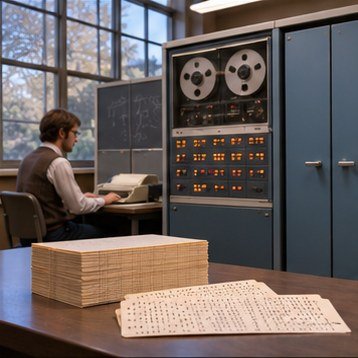
In the 1960s and early 1970s, computing was usually organized around institutional systems. Mainframes and minicomputers served businesses, universities, labs, and government offices. People often interacted through terminals, punched cards, or scheduled access rather than owning a computer of their own.
The microcomputer years
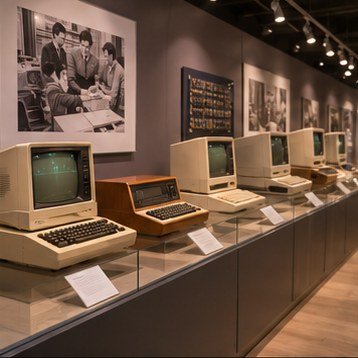
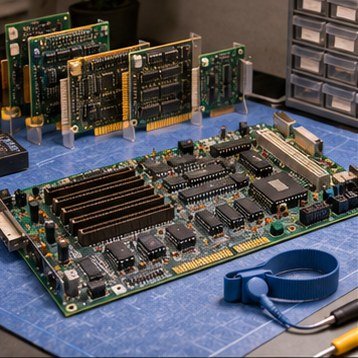
The arrival of microprocessors made smaller systems more practical. Hobbyists assembled kits, clubs shared programs, and early companies began selling complete computers. The market was fragmented: machines differed in processors, memory, keyboards, display standards, and software compatibility.
The desktop becomes ordinary
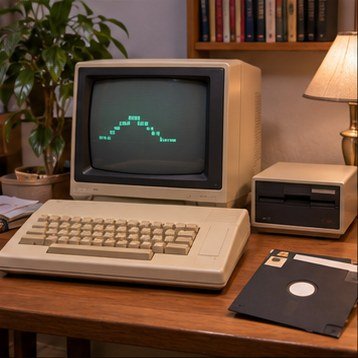
During the 1980s and 1990s, personal computers entered homes, schools, and offices in greater numbers. Better storage, color graphics, office applications, and graphical interfaces broadened their uses. Networks and the public internet then changed a stand-alone desktop into a gateway to shared information.