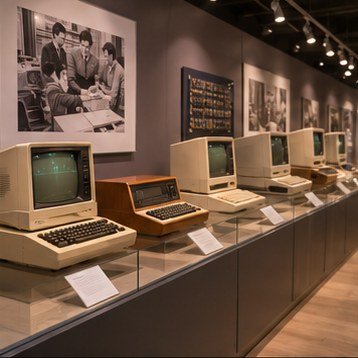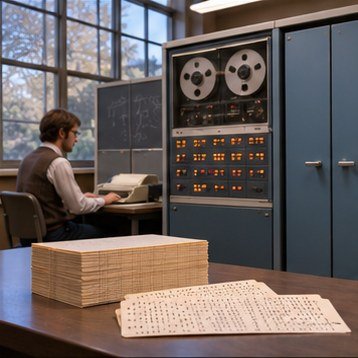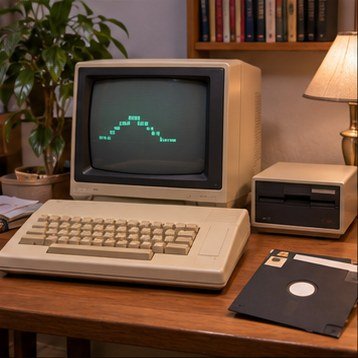
Hardware sets the boundaries, but software gives a computer its purpose. A small home machine could become a classroom, word processor, game console, or lab instrument when the right program and peripherals were available.
Operating systems and languages
An operating system coordinates basic interaction between the user, storage, and hardware. On early personal computers, systems could be simple and command-driven. Programming languages gave learners and developers a way to describe instructions, from short educational examples to more substantial applications.
Software distribution
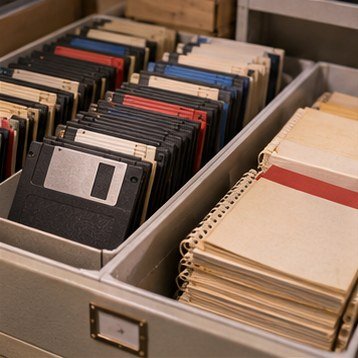
Programs arrived on cassette, floppy disk, cartridge, and later CD-ROM. Each format carried its own practical needs: media had to be stored carefully, drives had to work, and copies were often tied to particular machines or operating systems. Packaging and manuals are part of the historical record.
Preserving digital works
A physical disk can deteriorate, and a working drive may be difficult to find. Preservation work documents the original media, creates careful digital captures when appropriate, and records the tools and methods used. Copyright, privacy, and access questions also matter when software is made available to researchers.